

Deciding between parking lot repair, resurfacing, or full replacement can save or cost you thousands of dollars. If surface damage is minor and isolated, professional asphalt repair is usually the fastest and most cost-effective fix. However, when parking lot deterioration spreads across most of the surface or when base failure is involved, a full replacement becomes the only reliable solution.
Key Takeaways:
- Repair is often the most cost-effective option when damage is limited to isolated areas and the pavement structure remains sound. Many contractors use the 20–30% damage range as a general guideline, but a professional inspection should determine the best approach.
- Resurfacing adds a new layer over existing pavement when the base is still structurally sound
- Full replacement is necessary when drainage issues, base failure, or widespread structural damage are present
- Preventative maintenance, like crack sealing and regular sealcoating, dramatically extends the life of any asphalt surface
Written by the Vintage Multimedia Team
At Triple J Construction Services, we have worked with commercial property owners, managers, and businesses that need clear guidance on maintaining asphalt parking lots. Through that work, we have seen how confusing it can be to decide between resurfacing, overlay, repair, or full replacement.
In many cases, the right choice depends on the condition of the asphalt surface, the stability of the base, drainage issues, traffic volume, cracking, potholes, and long-term budget goals. A parking lot may look like it needs full replacement, but resurfacing may be enough if the foundation is still stable. In other cases, resurfacing can fail quickly when deeper structural issues are ignored.
This guide explains the key signs to look for so you can make a more informed decision before investing in major parking lot work.
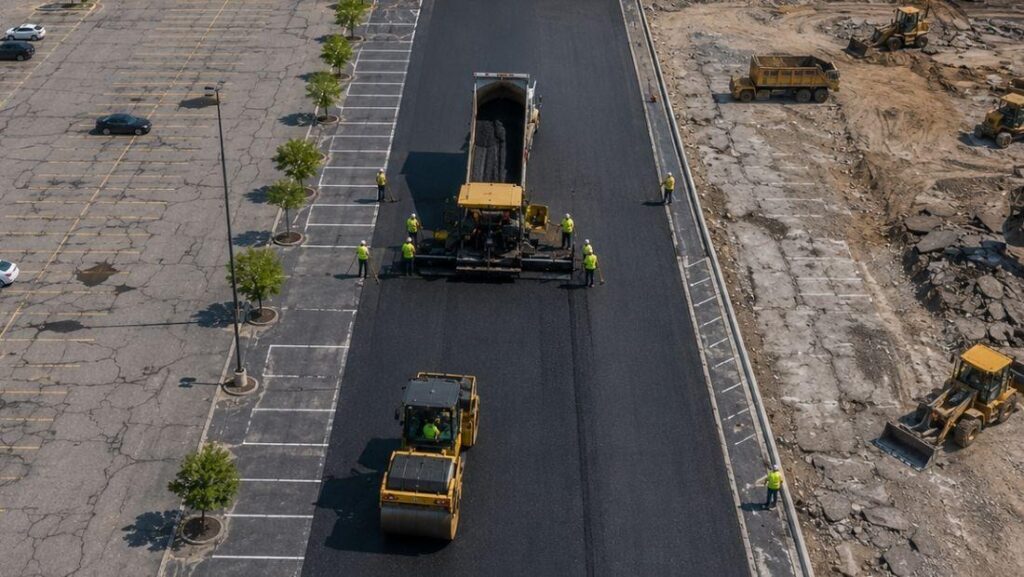
What Is Parking Lot Repair and When Does It Make Sense?
Parking lot repair refers to targeted fixes: asphalt patching, crack filling, and pothole repair applied to specific damaged areas. It is the right starting point when the overall pavement is still structurally sound, but isolated spots have started to break down.
These repair services work best when damage is localized, and if left untreated, it would only get worse. Catching asphalt cracks early prevents water infiltration, which is one of the leading causes of accelerated pavement deterioration. Research reviewed through NDLTAP and FHWA pavement preservation guidance explains that crack sealing helps stop water from reaching the asphalt layer, base, and subgrade, where moisture can weaken the pavement structure and speed up failure.
What the Repair Process Looks Like
A qualified contractor begins by assessing the damaged area, then removes loose material from potholes or larger cracks. Next, they apply a tack coat to help the new asphalt bond with the existing pavement. Finally, the asphalt mix is compacted to create a smooth surface that matches the surrounding lot.
Infrared asphalt repair is a newer method worth asking about. It heats the damaged pavement to integrate fresh asphalt mix seamlessly, producing a seamless repair with better long-term adhesion than traditional cold-patch methods.
When Repair Is the Right Call
- Damage covers less than 25% of the total parking spaces
- The asphalt base layer is firm and dry with no soft spots
- Standing water is absent or isolated to one small area
- The lot is under 12 years old with no history of repeated failures
One important note: Fresh patches on a faded surface will contrast visually. For commercial buildings where curb appeal matters, pair repairs with sealcoating to even out the appearance.
Parking Lot Resurfacing: The Smart Middle-Ground Option
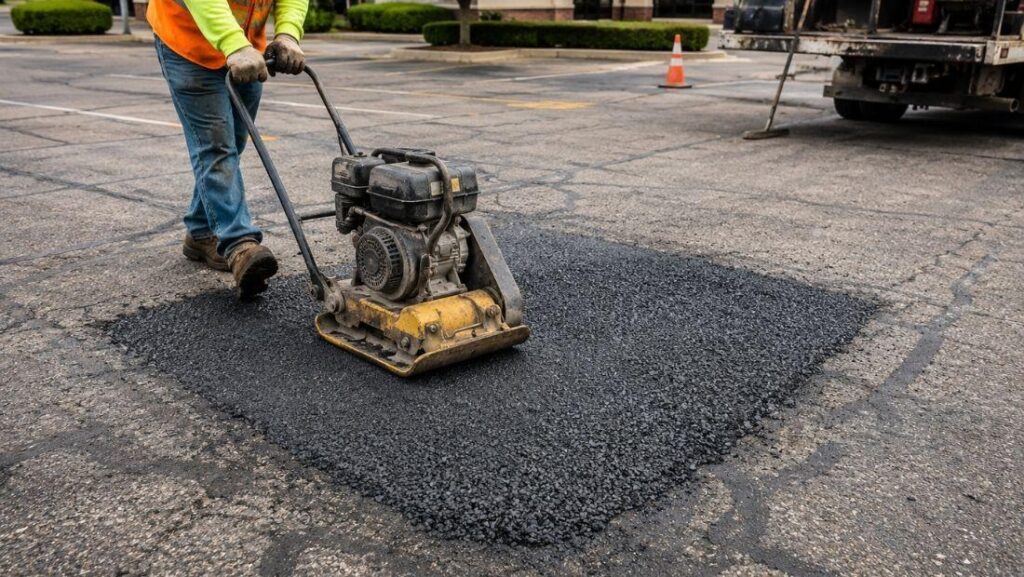
Resurfacing, also called an overlay, applies a new top layer of asphalt directly over the existing pavement. This process refreshes the surface, extends pavement life by 8–12 years, and costs significantly less than full replacement. It is the most popular choice for commercial parking lots, showing widespread surface damage but a stable foundation.
Before any overlay begins, contractors must fill cracks, patch potholes, and verify the base is solid. Skipping proper preparation can cause overlays to fail prematurely, sometimes within only a few years.
Is Your Lot a Good Candidate for Resurfacing?
| Condition | Resurfacing Works | Replacement Needed |
| Surface cracking, shallow | Yes | No |
| Faded parking lines, surface wear | Yes | No |
| Base feels solid underfoot | Yes | No |
| Alligator cracking (scaly pattern) | No | Yes |
| Standing water after 30 minutes | No | Yes |
| Repeated repairs are failing fast | No | Yes |
What Happens During a Resurfacing Job
First, the crew cleans and preps the existing pavement, addresses cracks, fills low spots, and repairs any damaged areas. A tack coat is then applied to bond the new asphalt to the old surface. Finally, the fresh asphalt mix is laid, compacted, and allowed to cure before vehicles return. Most commercial parking lots are ready for traffic within 24–48 hours.
Line striping is the final step. Fresh parking lines and parking lot striping restore clear traffic flow and bring the lot back to a like-new appearance. Faded parking lines are a common liability issue; clean, visible lines protect both pedestrians and property owners.
Full Replacement: When There Is No Other Option
Sometimes, repair services and resurfacing are simply not enough. Full replacement means removing the damaged pavement entirely, regrading the base, and laying down new asphalt from the ground up. It is the most expensive option, but when structural integrity is compromised, it is the only one that lasts.
The most common trigger is base failure. Once water infiltration erodes the sub-base, no top-layer fix will hold. Emergency repairs may patch the surface temporarily, but the underlying problem continues to cause further damage until the base is fully rebuilt.
Signs You Need Full Replacement
- Alligator cracking covers more than 50% of the lot
- Potholes that keep returning within months of being patched
- Drainage issues that cause standing water across multiple parking spaces
- Sections that flex or sink when vehicles drive over them
- A pattern of expensive repairs that never seem to hold
Asphalt vs. Concrete: A Quick Comparison
Replacement is also an opportunity to reconsider your material. Here is a straightforward breakdown:
| Factor | Asphalt | Concrete |
| Upfront cost | Lower | 20–40% higher |
| Lifespan | 20–25 years | 30–40 years |
| Maintenance needed | Regular sealcoating every 3–5 years | Minimal |
| Performance in heat | Can soften and rut | Stable |
| Performance in freeze-thaw | Flexible, handles well | Prone to cracking |
| Best for heavy trucks | Good with a proper base | Excellent |
For most commercial parking lots in moderate climates, asphalt remains the most cost-effective choice. Concrete makes more sense for high-traffic industrial facilities or warehouses where long-term durability outweighs the higher initial cost.
The Factor Most Contractors Skip: Your Base Layer
No discussion of parking lot repair is complete without addressing the base. Every asphalt surface sits on a compacted gravel sub-base. When weather conditions, especially freeze-thaw cycles, allow water infiltration into the base, the foundation begins to shift. Once that happens, surface repairs alone will not solve the problem.
Always ask your contractor for a core sample or deflection test before committing to resurfacing. This quick inspection pulls a small plug of asphalt to examine what is underneath. Contractors who offer this proactively are usually the ones worth hiring.
How a Preventive Maintenance Plan Saves You Money
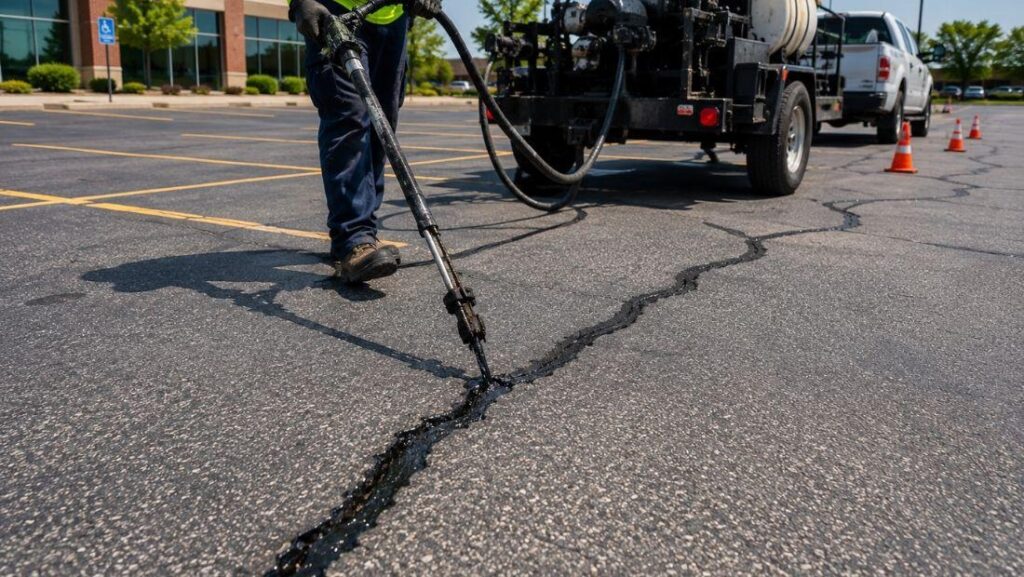
Proper maintenance is far cheaper than emergency repairs. According to the Federal Highway Administration (FHWA), pavement preservation focuses on applying cost-effective maintenance treatments before significant deterioration occurs, helping extend pavement life and delay expensive rehabilitation or full reconstruction. A routine maintenance schedule protects your investment, maintains curb appeal, and prevents small asphalt cracks from becoming structural problems.
For large commercial lots, preventative maintenance typically costs far less than full resurfacing or reconstruction over time. Routine sealcoating for that same lot runs around $15,000. Staying proactive closes that gap significantly.
Recommended maintenance schedule for commercial parking lots:
- 1–2 years: Seal cracks and apply sealcoating to prevent water infiltration
- 3–5 years: Full crack filling inspection and asphalt patching as needed
- 5–7 years: Professional surface assessment with a paving contractor
- 10–15 years: Resurfacing evaluation
- Off-peak hours scheduling: Always schedule work during off-peak hours to minimize disruption to traffic flow and business operations
Cost Overview: Repair vs. Resurfacing vs. Replacement
| Solution | Est. Cost per Sq. Ft. | Lifespan Added | Base Condition Required |
| Asphalt patching/repair | $1.50–$3.00 | 2–5 years | Must be sound |
| Resurfacing (overlay) | $2.50–$4.50 | 8–12 years | Must be sound |
| Full replacement | $5.00–$10.00+ | 20–25 years | Any condition |
These figures vary based on lot size, regional labor costs, and weather conditions at the time of installation. Dry conditions are essential when applying asphalt mix, as rain causes poor adhesion and further deterioration down the line.
Expert Tip
Before signing any contract, request a core sample test at two or three spots across your lot. This takes 15 minutes and costs almost nothing, but it reveals the true condition of your base layer before you commit to a solution. A contractor recommending a $40,000 resurfacing job should be able to show you, physically, that the base can support it. If they cannot, or will not, that is your signal to get a second opinion.
One Response